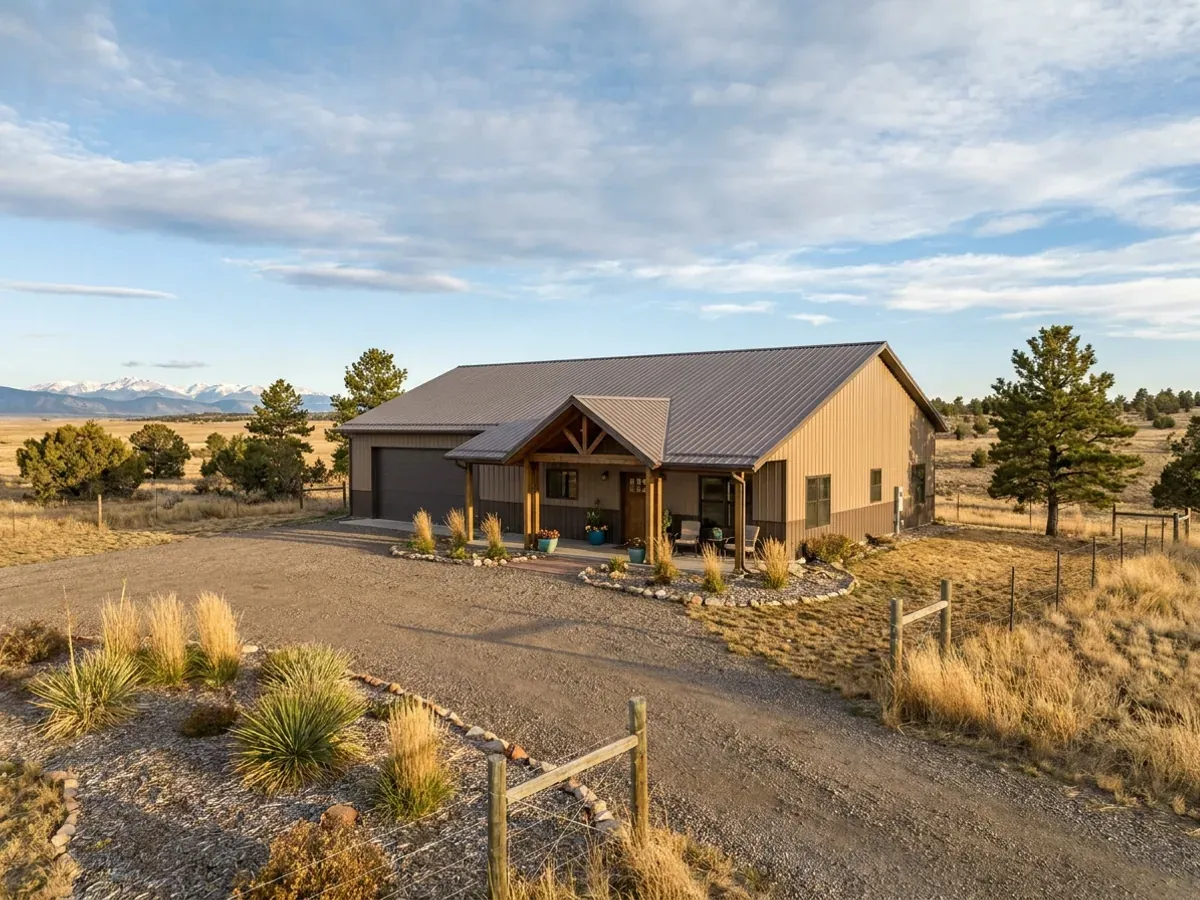
Turnkey Barndominium Builds in Colorado
A turnkey build means one team runs the whole job, from the first look at your land to the day you move in. In Colorado that job has more separate authorities than most buyers expect: a building department, or none, depending on where the land is; the local public health agency for the septic permit; the Division of Water Resources for the well; state or local inspectors for the electrical and plumbing. We schedule all of it, coordinate the licensed trades, and build the shell and the finished house.
Turnkey Builds: how the work runs
Four stages, in this order. The sequence matters more than it looks: getting the design values, the water and septic answers and any permits settled before anything is fabricated is what keeps a Colorado build from stalling.
Land, water and jurisdiction
Before design we answer the questions that can stop a build: who has jurisdiction over the parcel, what its design figures are, whether a well permit is available and what it allows, and whether the ground will take a septic system. On a parcel under 35 acres a new well may be limited to in-house use, which is worth knowing before anything is drawn.
Design, pricing and permits
The plan is drawn to your jurisdiction's snow load, wind speed and frost depth, with sealed structural drawings from a Colorado-licensed professional engineer where they are required. The foundation follows the soils report. Then the applications go in together: building permit where there is one, septic permit from the local public health agency, and the well permit, which the Division of Water Resources says may take up to 49 days to review.
Site work, foundation and shell
Driveway, clearing, grading, the well, the septic system and the foundation come first, in the order the ground and the season allow. Then the frame goes up and the building is dried in. Snow and frozen ground shape the calendar in much of Colorado, so we plan the shell to be closed in before the worst of winter wherever we can.
Finishes and hand-over
Insulation, drywall, cabinets, flooring, fixtures and the mechanical systems follow, with electrical and plumbing work by licensed electricians and plumbers under their own permits. Inspections happen at each stage your jurisdiction requires. At hand-over you get the house, the permits and inspection records, and the warranty documents for what is in it.
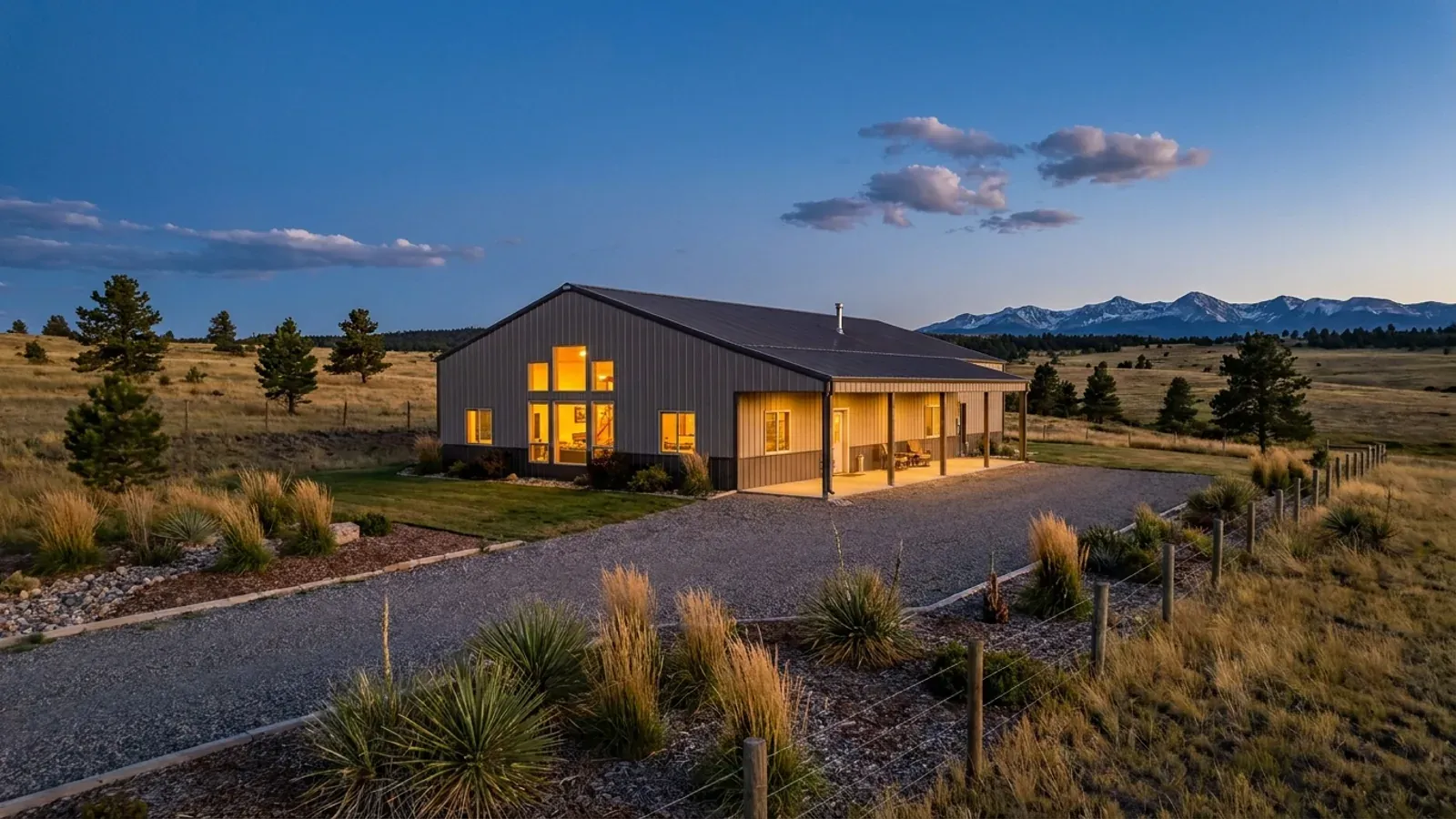
A Colorado barndominium answers to as many as four authorities
The building permit comes from a city, a county, a regional building department — or, in a rural county with no building code, from nobody. The septic permit comes from the local public health agency, under the state's Regulation 43. The well permit comes from the Division of Water Resources. The electrical and plumbing permits come from the state, unless your jurisdiction runs its own inspection program. A turnkey build means one team keeps all four moving in the right order.
Where we deliver turnkey builds
In Colorado the lines that matter are city limits, county lines and contour lines. Inside a city or town you have its zoning and its building department; out in the county, some counties enforce a building code and some rural ones do not; and in the mountain counties the snow load climbs with elevation, so two parcels in the same county can be drawn to very different roofs. Cross one of those lines and what changes is whether the build is inspected, who reviews the drawings and whose snow, wind and frost values they answer to. The septic permit from the local public health agency and the well permit from the Division of Water Resources go with you almost everywhere.
Barndominium builders across Colorado.
Every city and county we build in has its own answer on permits, septic, water and design values. The service area pages set out what each one publishes.
What actually decides the price
Square footage is the number everyone leads with, and it is rarely the one that moves a barndominium budget. These four do.
-
Water and wastewater
A well and a septic system are often the largest items on a rural Colorado budget outside the house itself, and neither can be priced until the site has been looked at. Well depth depends on the aquifer; septic design depends on the soil. Where a central water system is available instead, the Division of Water Resources notes that water taps for new construction can be expensive.
-
Soils and foundation
The Colorado Geological Survey calls swelling soil the state's most significant geologic hazard, and on Front Range clay a soils report may call for drilled piers, a structural floor or over-excavation. On parts of the Western Slope the survey warns of soils that collapse when wet. Either way, the foundation is priced from the report, not from a rule of thumb.
-
Snow load and elevation
The design snow load sets the frame, and in the mountain counties it climbs with elevation. Mesa County prints 30 lb of ground snow around Grand Junction and 100 lb at Mesa Lakes. The same floor plan costs more to frame high up than on the plains, and access, delivery and the building season get harder too.
-
Finish level
After the site and the structure, finishes are the biggest lever: cabinets, counters, flooring, windows, fixtures and the heating system. We price them to the level you choose rather than a single package, and we do not publish prices of our own because a Colorado build varies too much from parcel to parcel for a figure to mean anything.
Turnkey Builds in Colorado: common questions
8 questions we get asked most often about building in Colorado. If yours is not on the list, ask it directly.
What does turnkey mean for a barndominium?
Do you do the electrical and plumbing?
How long does a turnkey barndominium take in Colorado?
Can you build on land I have not bought yet?
Is there a building inspection if my county has no building code?
Who holds the building permit?
What does a turnkey build cost?
How do I start?
Keep reading
The pages that answer the next question this one raises.
How Long Does It Take?
Where the building, septic and well permits sit in the schedule, and how winter moves the start date.
Read itHow to Finance a Barndominium
A single contract is also the structure lenders are most comfortable underwriting.
Read itBarndominium Cost Guide
Sourced ranges for the finished tier, so a quote has context.
Read itReady to put turnkey builds against a real plan? Start there and the rest follows.
Tell us about the land
Tell us where the parcel is and what you want on it, and we will come back with who has jurisdiction, what the land needs before it can be built on, and a realistic budget range. Starting the survey costs nothing.